By semi-popular demand, as a follow-up to my last post: my *she’s got Sharmila eyes* effort.
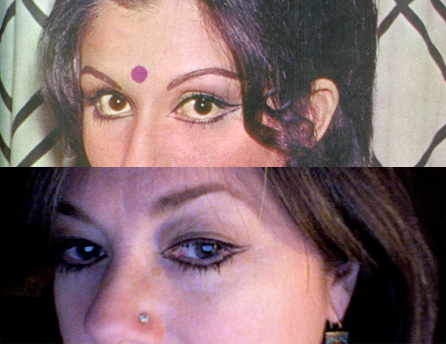
(Sorry for the bad computer photo but Gemma can’t take pictures—it’s that old opposable thumbs issue again.)
read more »

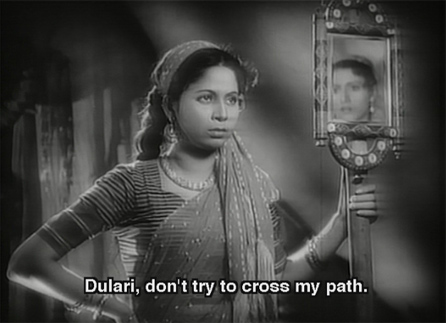
Most Hindi films from the 1940s are pretty melodramatic. Not only is the acting theatrical and stagey, but the dialogues are overwrought and repetitive (so that you don’t miss the point, I guess) and there are 10-15 songs sprinkled throughout at the rate of one every ten minutes (or so it seems). Characters are self-sacrificing and martyred, or unreasonably demanding; and there’s often some sort of love triangle ending with at least one person’s death (usually Dilip Kumar’s character). All this can make the movie heavy going, but at least the plots tend to be fairly straightforward and easy to follow. And if you know what to expect they always have something fun to offer (like Hindi films in every decade!).
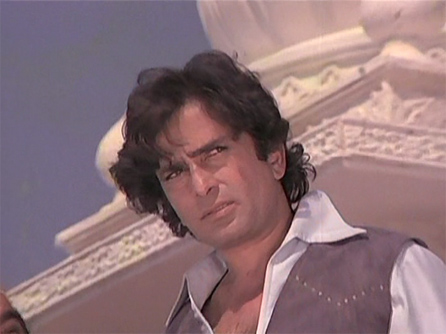
I was inspired by Antarra’s review to see this film—so many thanks, Antarra! It’s essentially an hommage to Dharam-Veer with some pointed differences, which may make it a better film or a worse one, depending on your point of view. I loved Dharam-Veer (of course!) but I also really enjoyed this movie, maybe because my philosophy is if one of something is good, then two of it is better.
What Dharam-Veer has that Amar Shakti doesn’t:
What Amar Shakti has that Dharam-Veer doesn’t:
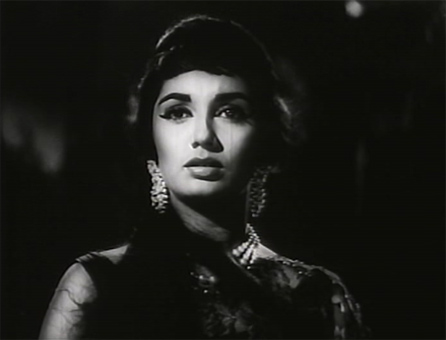
Raj Khosla is one of my favorite directors. But man, this movie is a waste of time. It’s chock full of red herrings that never lead anywhere (and are never explained), along with clues which are so manifestly obvious that you feel clubbed over the head with them. Plus, it’s boring, with an ending so convenient and contrived that there’s no payoff for sitting through it at all. I don’t know if my dislike of Manoj Kumar contributed to my dislike of this film, but I do know that his presence didn’t help it any. The only bright spot really was Helen, and she was bumped off pretty early on. Sadhana looked gorgeous, but she appeared to be as bored as I was.
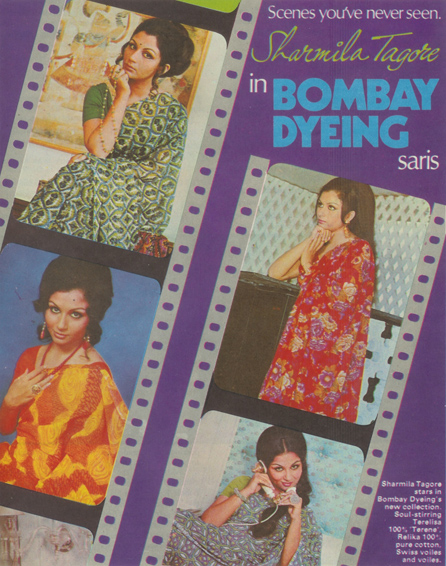
Being as that I brought in the New Year with Abbott & Costello and Lee Van Cleef and Gina Lollobrigida instead of Hindi movies, all I have to offer today is this lovely 1973 saree ad, courtesy of Sharmila and Bombay Dyeing. More soul-stirring synthetics! How I love them.
Here’s what Stardust had to contribute about Dharmatma. This was in 2003 1973; the film didn’t come out until 2005 (yes, too much wine at New Year’s) 1975—and I have to say that I did notice some Feroz age continuity issues while I was watching it, although they didn’t affect my feelings for the film. But in any case, I hope the Bush-kashi is more horse-friendly than it looked!
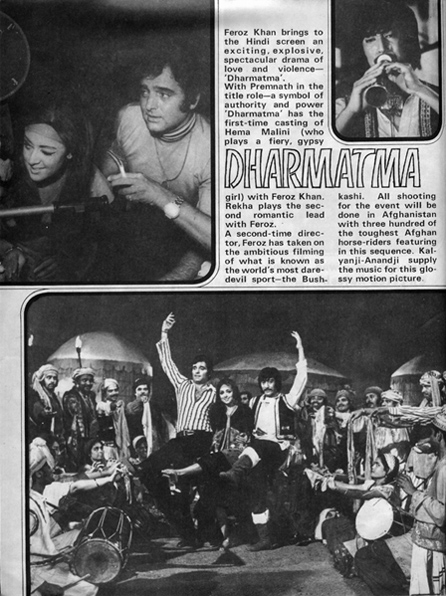
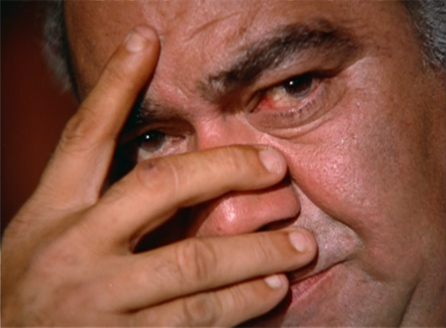
Ah, Feroz Khan. As a producer and director, you spare nothing! I watched Dharmatma a long time ago and it was time for a rewatch in the wake of the fantabulous Apradh. I remember that I had liked it, but I was bowled over completely the second time around.
Premnath dominates as the title character: a wealthy and powerful man who believes entirely that the end justifies the means, who has convinced himself that his bad deeds are compensated for by his good ones. Indeed, he is called “Dharmatma” (God Man) by everyone because of those good deeds. Feroz Khan plays his son, a man standing firmly on principles that are completely at odds with his father’s.
Their conflict plays out against a backdrop that includes the gorgeous Afghani landscape, crazy nightclubs (and a dwarf bartender!), opulent mansions, and all the stylish goodness you’d expect from the era (and from Feroz too). The production values are high, the camera work spectacular. Plus: Hema Malini as a gypsy dancer! Danny Denzongpa! Ranjeet and Sudhir in matching outfits! Rekha! Helen! Nadira as a gypsy fortuneteller! Faryal as a sexy nurse! Iftekhar as not a police inspector! And Kalyanji-Anandji’s music doesn’t suck either, especially the background score.
 MemsaabStory