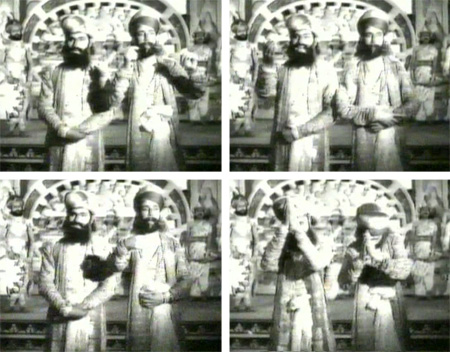
The biggest surprise that this film has to offer is that rap was invented in India! Oh, yes. Here is incontrovertible proof, given us by two guys who had the outfits a bit wrong but all the hand movements just right. Listen to this (it’s short)!
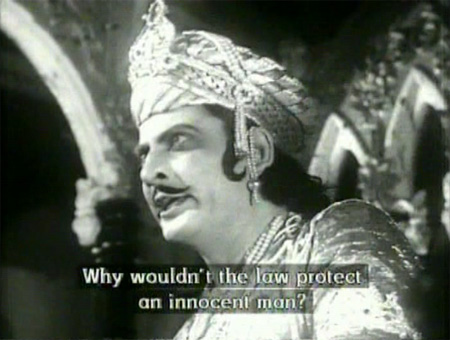
I’m in love again. Almost on a Shammi scale, even. I first saw him in Humayan, where his lust for vengeance was constantly thwarted by a target who was nice to him. But his eyes and his bristling manner enchanted me, even then. And now! Chandramohan plays the Mughal emperor Jehangir in Sohrab Modi’s classic Pukar, and he is spectacular. Sometimes I had to stop the film just to sit and gaze at him.
To be fair, the entire film is spectacular. It is overwhelmingly magnificent, a sumptuously visualized and thrillingly plotted tale of love, murder and justice. I will forever be in my friend Muzafar’s debt for sending it to me. He also sent me 1941’s Sikandar, with Prithviraj Kapoor! These two films along with 1943’s Prithvi Vallabh form a trilogy directed and produced by Modi, and I feel so lucky to be able to see them. Again though, it really begs the question: why haven’t these treasures been restored, subtitled and put on DVD? Why?? I don’t know if I want to live in a world where Gunmaster G9’s shenanigans take precedence over this masterpiece!
Isn’t this a cool studio/production house emblem? So very art deco and Indian, all at the same time. Incidentally, Delux Films was the defendant in a landmark copyright lawsuit brought by playwright RG Anand against them for their 1956 film “New Delhi.” He claimed that it was an unauthorized copy of his play “Hum Hindustani” but Delux won the case when it finally came before the high court in 1978 (in a nutshell: it was similar, but not similar enough). Who says the wheels of justice turn slowly?
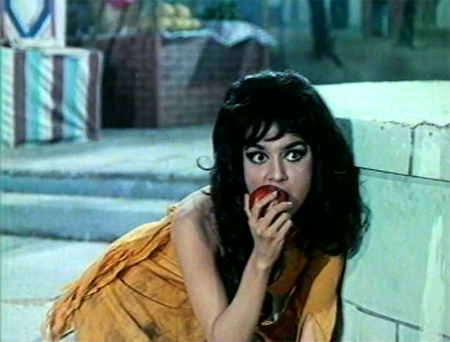
Asha Parekh is my favorite heroine in Hindi cinema. There, I’ve said it, and I’m carving it here in blog-stone for posterity. I should also say that in topping that list, she reigns over some of the most beautiful and talented women in film history! I am sure some will disagree with me, but my reasons for picking her are as many and varied as the films she starred in over a very long and distinguished career.
She is, when all is said and done, a woman you could steal horses with.
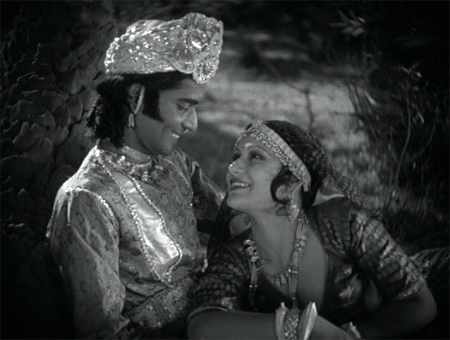
I have to start out this review by thanking dustedoff and Laura for bringing this film to my attention. It never occurred to me that anything from the silent era in India might be available on DVD, let alone so beautifully restored with English intertitles! A gorgeous soundtrack by Nitin Sawhney which complements the visuals perfectly has also been added. Many of these older films are worth watching mostly for their historical value, but this—this is a treasure and a treat, all at once. It’s also short, clocking in at 74 minutes.
It’s the third film from the collaboration between Himansu Rai and German director Franz Osten, which had already produced Light of Asia and Shiraz. Osten was working with his brother Peter Ostermayr’s production company Emelka in Germany when he met Himansu and Devika Rani, and came to India to work with them on these joint efforts. This partnership also gave us 1936’s Achhut Kanya starring Ashok Kumar and Devika Rani; but when World War II broke out Osten and the other German technicians were arrested by the British and then deported, and Himansu Rai died in 1940.
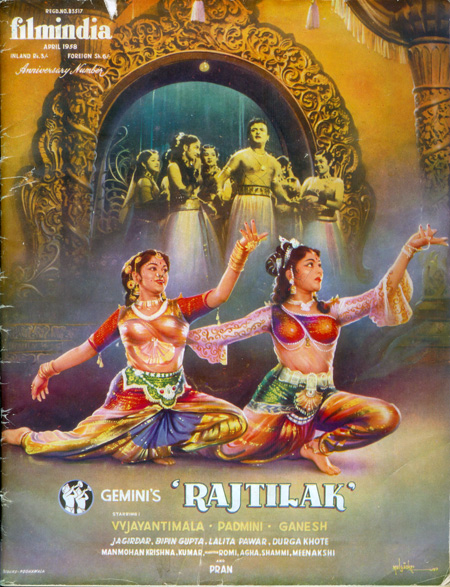
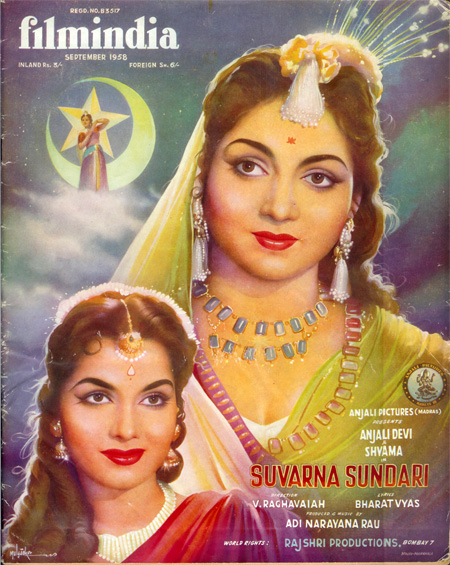
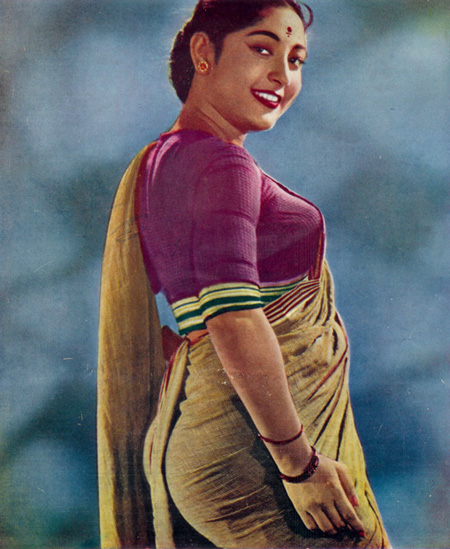
I think this blog needs some color! And I know I do.
Baburao’s caption reads:
What an upholstery! After this how dare we call ourselves a starving people? And why do we at all need the American loan for our Five-Year Plan when the design is already so perfect and so complete? What we seem to need is a Ramzan every alternate month. Mala Sinha brings new tension to the screen in “Phir Subha Hogi”, a sensational theme produced and directed by Ramesh Saigal.
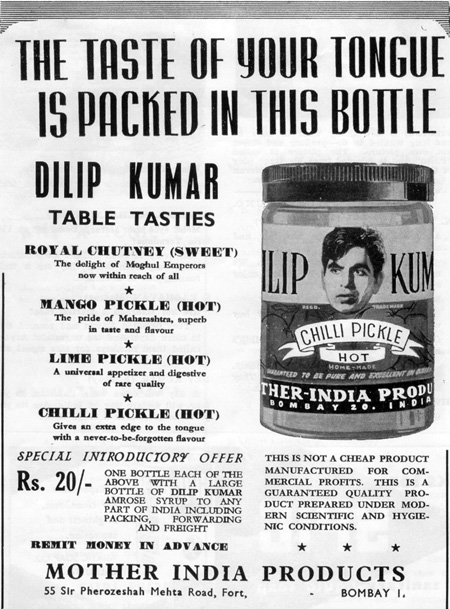
Long before Paul Newman appeared on bottles and jars of “Newman’s Own” salad dressings and spaghetti sauce, Dilip Kumar’s image was decorating jars of “Table Tasties” chili pickles. Hot indeed!


 MemsaabStory