August 24, 2009

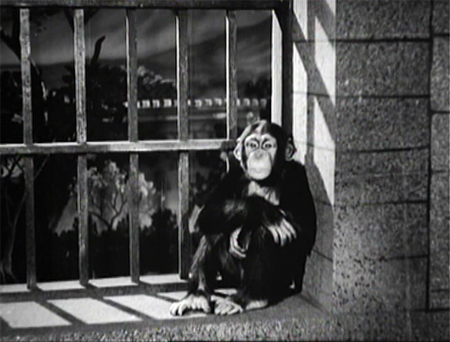
WC Fields once famously said: “Never act with children or animals.” Dilip Kumar and Dev Anand should have listened to him: they are completely overshadowed here by the charisma of a chimpanzee named Zippy. That’s not necessarily bad (or surprising) (I mean, it’s a chimp!), but I had hoped for a much better movie from these two screen legends in their only real outing together.
Continue reading →
Posted in Baburao Patel's Poisonous Pen, Hindi movies |
32 Comments »
August 20, 2009
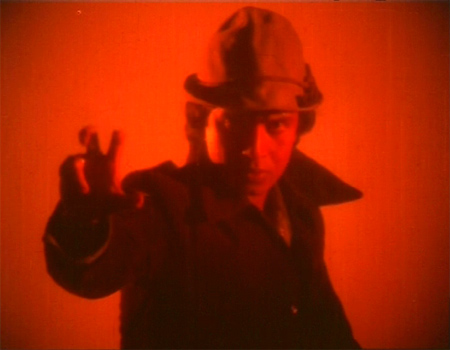
Gun Master G-9! will…claw your eyes out?
Mithun has been sadly underrepresented in my Hindi film experience—I have only seen him in Disco Dancer, Ashanti (meh) and Ganga Jamuna Saraswati (argh, plus he was totally wasted in it). I don’t really “get” the Mithun appeal based on those three films—I keep hearing what a great dancer he is, for instance, but have not seen any evidence to support it. I’ve actually never seen any evidence that there was any choreography at all in Hindi films from the 80s, so perhaps it isn’t really his fault. In any case, I thought perhaps I could watch this and expand my Mithun knowledge a wee bit. I was warned against it, I admit, but I’m tired of looking for Surakksha; Gun Master G-9 is Gun Master G-9 after all, right? How bad can it be?
Continue reading →
Posted in Hindi movies |
81 Comments »
August 19, 2009
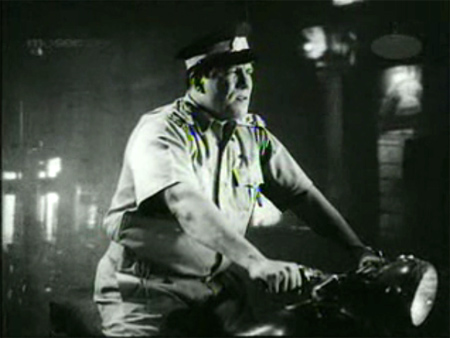
Atul and I have bonded over (among many things) our love for the music of the more “obscure” (unfortunately) so-called B- and C-grade Hindi films. Not only do these movies often have lovely songs by lesser-known composers (e.g. Ganesh, GS Kohli), but they very often have straightforward and fun stories too, and they give one an opportunity to see well-known actors as they were starting out (e.g. Feroz Khan, Sanjeev Kumar). B-movie directors often had the good sense to give ladies like Helen lots to do, as well. One of my favorites of these guys is Aspi Irani (usually credited as Aspi). He made the delicious Daku with Shammi, and the equally delightful Shabnam, so when Atul recommended Smuggler and kindly offered to send it to me, I jumped on it.
Continue reading →
Posted in Hindi movies |
24 Comments »
August 16, 2009
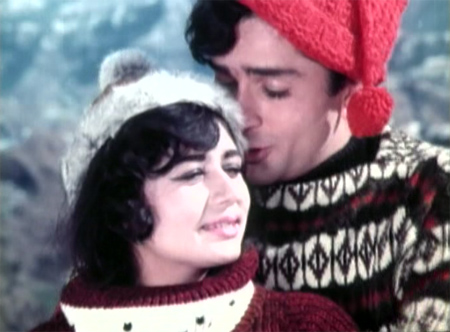
This is an absolutely charming, quintessentially 1960s film with a cast of stalwarts and the ever-charming and delicious Shashi at his “aw-shucks” best. The story centers around two Muslim families, which makes for lovely fashions for Nirupa Roy and Manorama who play the matriarchs of each. Nanda is styling, too! The only (minor) disappointment for me was the music by Madan Mohan; it was nice enough—and picturized well—but didn’t make much of an impression. What makes the movie memorable though is the strong ensemble cast, who all contribute humor, believability and warmth to a plot which moves briskly along.
Continue reading →
Posted in Hindi movies |
30 Comments »
August 14, 2009
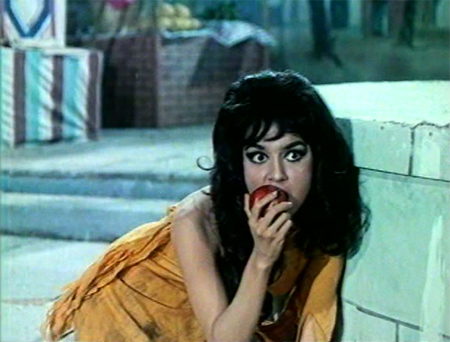
Asha Parekh is my favorite heroine in Hindi cinema. There, I’ve said it, and I’m carving it here in blog-stone for posterity. I should also say that in topping that list, she reigns over some of the most beautiful and talented women in film history! I am sure some will disagree with me, but my reasons for picking her are as many and varied as the films she starred in over a very long and distinguished career.
She is, when all is said and done, a woman you could steal horses with.
Continue reading →
Posted in Hindi film history, Hindi movies |
152 Comments »
August 11, 2009
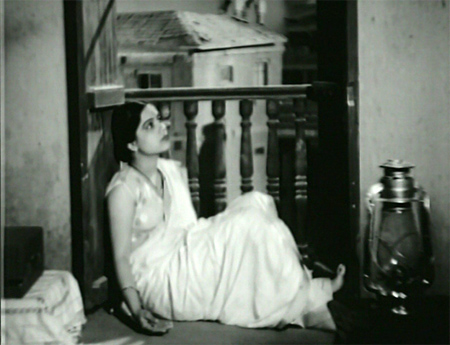
This film by V. Shantaram for his Prabhat Films company is quite simply amazing (Kunku is the Marathi version, which I saw; the Hindi version is called Duniya Na Mane with the same cast and crew). It is made with such stark realism and simplicity that it takes your breath away, and the social commentary at the heart of the film seems (to me anyway) to be way before its time. There is also delightful humor (I laughed out loud in places) punctuating the somber and nuanced story, along with powerful performances. Shanta Apte shines as the fierce Neera, a young girl forcibly married off to a wealthy widower old enough to be her father; and Keshavrao Date is equally good as her groom. He begins as a selfish and not so sympathetic figure who evolves into an object of pity, hoping that this marriage will make him feel young again, and loved—alas, it doesn’t quite work out that way.
Continue reading →
Posted in Hindi movies |
65 Comments »
August 8, 2009

This is not a very good film. In fact, many might flat-out call it a bad one. But I was entertained thoroughly by the sheer power of Ashok Kumar’s awesome performance, an Abundance Of Helen, and the gaudy spectacle of Pradeep Kumar’s makeup (he wears more of it even than the ladies). Plus, a (way too) short appearance by my favorite band, Ted Lyons & His Cubs in the seventh film that I know about, so far. And with Helen, too—a first! I’m always happy to see them and hear their bahut achcha cha cha tunes. And so I found it easy to put up with the predictable plot, the dreary Pradeep-Padmini pairing, the day/night continuity issues, horrible editing (apparently a five year old was given responsibility) and so on. It is, when all is said and done, Dadamoni’s movie, and he is great in it.
Continue reading →
Posted in Excellent Use of Helen, Hindi movies |
34 Comments »
August 7, 2009
When I’m feeling (more) unmotivated to write (than usual), Filmindia and its editor/writer/man-of-all-trades, Baburao Patel comes to the rescue.

(Insaniyat is one of the films I need to write up.)
Continue reading →
Posted in Baburao Patel's Poisonous Pen, Hindi film history, Hindi movies, Vintage Bollywood images |
29 Comments »
August 2, 2009

Reviews of this masterpiece abound on the world wide web, almost universally in a chorus along the lines of: “this is a delightful and original piece of filmmaking blah blah blah…” Well, it is. I do not disagree in the slightest, which would normally mean I wouldn’t bother adding my voice to the chorus (I don’t sing that well)—but I can’t resist giving those of you who may not have seen it a glimpse of its fabulousness. And, by the way, if you haven’t seen it, there’s no excuse! The creative force behind the film, Nina Paley, is giving it away for free. You can even download a DVD version (which I prefer to watching it online).
Continue reading →
Posted in Hindi movies |
88 Comments »
July 31, 2009
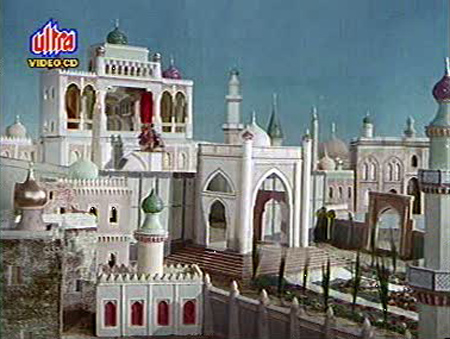
Previously, Sinbad has found a special sword (not that he’s really used it thus far) and Aladin has found a magic lamp complete with Genie Helen, but poor Alibaba (except for one brief moment) has nothing to show for our trio’s (or quartet’s, if you count Jameela) adventures.
Continue reading →
Posted in Hindi movies |
40 Comments »



 MemsaabStory